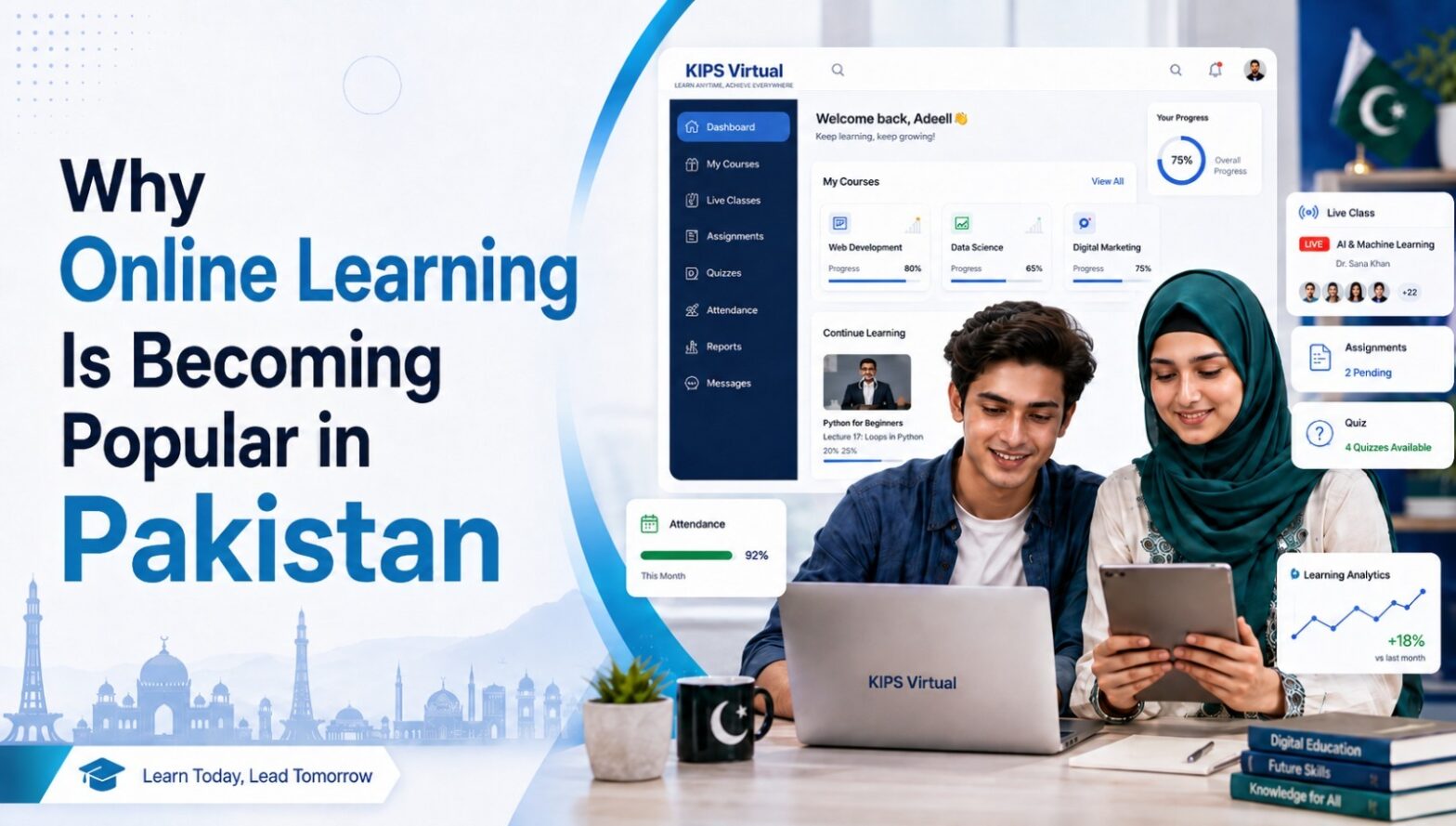
A decade ago, most students in Pakistan associated learning with a physical classroom — a fixed timetable, a commute, and a teacher standing at the front of the room. That picture is changing fast. Today, students in cities like Lahore, Karachi, and Islamabad, as well as smaller towns with limited access to quality academies, are increasingly turning to online learning to prepare for exams, learn new skills, and even complete degrees.
This article looks at why online education is gaining ground across the country, what’s driving the shift, and how platforms like KIPS Virtual are shaping the way Pakistani students’ study today.
What’s Driving the Rise of Online Learning in Pakistan?
The growth isn’t happening for one single reason — it’s a combination of access, affordability, and changing expectations.
Smartphone and internet penetration have expanded significantly over the past several years, putting online learning within reach of students who previously had no way to access quality coaching outside major cities. A student in a smaller district no longer has to relocate or commute hours to attend a good academy — a stable internet connection is often enough.
Cost is another major factor. Physical academies come with transport costs, accommodation for out-of-city students, and often higher fees for in-person batches. Online platforms tend to reduce or eliminate several of these expenses while still delivering structured, exam-focused content.
Who Is Choosing Online Education, and Why?
Is online learning only for students who can’t attend physical classes?
Not anymore. While it started as an option mainly for students in remote areas, it’s now a deliberate choice for many students who could attend an in-person academy but prefer the flexibility online learning offers.
Students Preparing for Competitive Exams
Entrance tests like the ECAT and MDCAT require intense, structured preparation, and online platforms have become a serious alternative to physical academies for this purpose. Recorded lectures mean a student can revisit a difficult Physics numerical as many times as needed, something a live classroom doesn’t allow.
Working Students and Those Balancing Multiple Commitments
Older students completing certifications or additional coursework alongside a job or family responsibilities benefit from being able to study on their own schedule rather than fixed class timings.
Families Prioritizing Safety and Convenience
For some families, particularly for female students in certain areas, studying from home removes commute-related safety concerns entirely, which has made online options especially appealing.
How KIPS Virtual Fits into Pakistan’s Online Education Shift
KIPS Virtual is a clear example of how established academies have adapted to this demand. Rather than requiring students to relocate to Lahore or another major city for quality ECAT or MDCAT preparation, KIPS Virtual delivers structured lectures, chapter-wise practice tests, and performance tracking online.
This matters because it addresses one of the biggest criticisms of online education: that it lacks structure compared to a physical classroom. A well-designed platform mirrors the pacing and accountability of in-person coaching — assigned lectures, regular tests, and visible progress tracking — rather than leaving students to figure out a study plan alone with scattered recorded videos.
That said, the platform is only as effective as the discipline behind it. Students who treat online lectures with the same seriousness as a physical class tend to see real results; those who watch passively without attempting practice tests generally don’t.
Related reading: for students specifically preparing for ECAT, a dedicated guide on ECAT preparation at home covers subject-wise strategies that pair well with a platform like this.
Common Concerns About Online Learning in Pakistan
Does online learning actually work as well as in-person classes?
For subjects with a clear structure — Math, Physics, Chemistry — well-designed online platforms with practice tests and progress tracking can match or even exceed in-person results, provided the student stays consistent. Where online learning struggles more is in subjects needing frequent, spontaneous discussion, though many platforms now offset this with live doubt-clearing sessions.
Is online learning cheaper than physical academies?
Generally, yes. Without transport, accommodation, or in-person facility costs, online platforms typically offer lower overall fees for comparable content, though exact savings depend on the specific platform and course.
Practical Tips for Making Online Learning Work
Switching to online education isn’t just about signing up for a platform — it requires some adjustment to work well.
- Set a fixed study schedule , even though classes are flexible. Treating lecture times loosely often leads to falling behind.
- Actually, attempt practice tests and past papers, not just watch lectures. Passive viewing is the single biggest reason students underperform with online prep.
- Use a dedicated , distraction-free study space at home, even if it’s just a corner of a room, to mentally separate study time from downtime.
- Track your own progress weekly , using whatever performance data the platform provides, rather than judging progress by hours spent logged in.
Frequently Asked Questions
Why is online learning becoming popular in Pakistan?
Online learning is growing due to wider internet access, lower costs compared to physical academies, and the flexibility it offers students in smaller cities who previously had limited access to quality coaching for exams like ECAT and MDCAT.
Is online education in Pakistan as effective as traditional classroom learning?
It can be, especially for structured subjects like Math and Science, provided the platform offers organized content, practice tests, and progress tracking — and the student stays consistent with attempting practice material rather than passively watching lectures.
Which students benefit most from online learning platforms like KIPS Virtual?
Students preparing for competitive entrance exams, those in cities without access to strong physical academies, and students balancing study with other commitments tend to benefit most from the flexibility and structure these platforms provide.
Final Thoughts
Online learning in Pakistan isn’t a passing trend — it’s a practical response to real barriers like cost, distance, and access to quality coaching. Platforms like KIPS Virtual show how structured, exam-focused online preparation can genuinely rival in-person academies when students engage with it consistently.
If you’re considering making the switch, start by reviewing a platform’s course structure, practice test offerings, and support options — and pair it with a disciplined weekly study routine to get real value out of it.